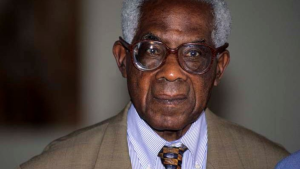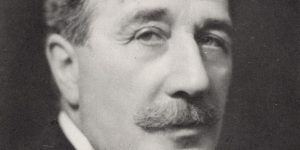
In 1924, he entered the École Normale Supérieure on rue d'Ulm. His class included Sartre, Nizan, and Canguilhem. In 1928, he came first in the competitive examination for the agrégation in philosophy—Sartre failed the written exam that same year. He had witnessed the rise of Nazism in Berlin between 1931 and 1933 while French intellectuals looked the other way. He wrote *L'Opium des intellectuels* (The Opium of the Intellectuals) against pro-Soviet blindness. He spent thirty years at *Le Figaro*. He died on October 17, 1983, at the Paris courthouse, a few minutes after testifying for a friend.
Aron at the ENS Paris: class of 1924 with Sartre, first in the agrégation exam
Raymond Aron was born on March 14, 1905 in Paris, into a bourgeois Jewish family from Alsace-Lorraine where patriotism and culture went hand in hand. His father Gustave, who came second in the competitive examination for a teaching position in law when only one position was available, had given up on the university — a partial failure that weighed on the ambitions he had for his sons.
After attending the Lycée Hoche in Versailles and completing two years of preparatory classes at the Lycée Condorcet, Raymond Aron was admitted to the École Normale Supérieure (ENS) on Rue d'Ulm in 1924, in the same class as Jean-Paul Sartre, Paul Nizan, Georges Canguilhem, Daniel Lagache, and the future Nobel laureate in physics, Louis Néel. In his memoirs, Aron recounted his sense of wonder upon arriving at Rue d'Ulm.
In 1928, he came first in the competitive examination for a teaching position in philosophy. That same year, Sartre failed the written exam—he would in turn come first the following year, with a higher score than Aron. This symmetry structured an intellectual and political rivalry that would last until Aron's death in 1983.
Read more: In 2024-2025, the ENS and its research are taking an impact-oriented turn – Planète Grandes Écoles
Aron in Berlin: the rise of Nazism and the break with the pacifist illusion
In 1930, Aron left to study for a year at the University of Cologne. From 1931 to 1933, he was a resident at the French Institute in Berlin. He had attended Hitler's rallies, witnessed the collapse of Weimar democracy, and felt the violence taking hold in the streets. While many French intellectuals remained trapped in pacifist illusions or pro-Soviet sympathies, Aron understood very early on what totalitarian regimes would truly promise.
In Berlin, he had also discovered German sociology — Max Weber, Dilthey, Rickert. This encounter had oriented his thinking towards a liberal philosophy of history, radically different from the Marxist Hegelianism that his former classmates would propagate after the war.


In 1933, he returned to France and took up a teaching position at the lycée in Le Havre—succeeding Sartre, who was leaving for Berlin to take his place. When asked what reputation Sartre had left him with the students, a former pupil replied that Aron played tennis with the more prominent students and followed the curriculum "with clarity," while Sartre would go out drinking beer with the more enthusiastic ones at night in the port's backstreets. The saying goes: "I entered philosophy class on October 1, 1933. We were all expecting Sartre to appear." In 1938, Aron earned his doctorate in literature. In 1940, he went to London to join de Gaulle and became editor-in-chief of La France libre.
Read more: Jean-Paul Sartre, ENS Paris (Ulm), philosopher of existence – Alumnow
Aron at Le Figaro and L'Opium des intellectuels: thirty years swimming against the current
After the war, Raymond Aron pursued both an academic and journalistic career. He became a professor at the Sorbonne in 1955, a director of studies at the EHESS in 1960, and a professor at the Collège de France in 1970. Simultaneously, for thirty years—from 1947 to 1977—he was an editorial writer for Le Figaro. There, he published analyses that ran counter to the dominant intellectual current, which was overwhelmingly pro-Soviet.
In 1955, *The Opium of the Intellectuals* was a bombshell in French literary circles. Echoing Marx's phrase about religion being the "opium of the people," Aron accused communism of being the opium of the intellectuals—an ideology that allowed them to hope for a liberating revolution while turning a blind eye to Soviet crimes. He attacked what he called the three myths of the French intellectual left: the myth of the Revolution, the myth of the Proletariat, and the myth of the Left. The book sparked a lasting controversy and established Aron as the leading liberal conscience of postwar France. His self-definition as an "engaged observer" encapsulated his entire stance: not to withdraw from the world, but to observe it without being blinded by ideological passion.
Aron's death: at the courthouse, after testifying for a friend
Raymond Aron died on October 17, 1983, at the age of 78, in the Paris courthouse. He had just testified in defense of his friend Bertrand de Jouvenel, who was implicated in a case. A few minutes after leaving the courtroom, he suffered a heart attack. The way he died—in service of a friendship, after a life dedicated to bearing witness to what he believed was right—remains a powerful symbol of the rare coherence between the man and his work.
In 1978, he founded the intellectual journal Commentaire to defend and illuminate the principles of a liberal society. For alumni of the École Normale Supérieure in Paris, Raymond Aron represents the most demanding model of the intellectual: one who refuses to relinquish doubt in favor of ideological certainty, who chooses to "be right alone" rather than be wrong with the dominant class. The phrase one of his former students from Le Havre used regarding the choice between Sartre and Aron remains true to their entire debate: some prefer to be wrong with Sartre rather than right with Aron.
Frequently Asked Questions about Raymond Aron
Which school did Raymond Aron attend?
Raymond Aron entered the École Normale Supérieure on rue d'Ulm in 1924, in the same class as Jean-Paul Sartre, Paul Nizan, Georges Canguilhem, and Daniel Lagache. He came first in the agrégation examination in philosophy in 1928. He obtained his doctorate in letters in 1938.
What is Raymond Aron's "The Opium of the Intellectuals"?
The Opium of the Intellectuals (1955) is Raymond Aron's most famous work. Adopting the Marxist formula of religion as "the opium of the people," Aron criticizes the blindness and complacency of French intellectuals toward communist regimes. He deconstructs three structuring myths of the intellectual left: the myth of the Revolution, the myth of the Proletariat, and the myth of the Left.
What is the relationship between Raymond Aron and Sartre?
Raymond Aron and Jean-Paul Sartre had been classmates at the École Normale Supérieure on rue d'Ulm (class of 1924). In 1928, Aron came first in the competitive examination for the agrégation in philosophy—Sartre failed the written portion, before coming first himself the following year. Their paths then diverged radically: Sartre toward communist activism, Aron toward anti-communist liberalism. Their intellectual and political rivalry shaped the French intellectual debate for fifty years.