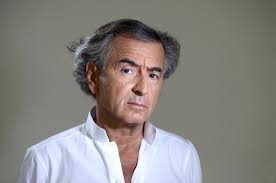
He enrolled at Sciences Po while simultaneously attending the École Normale Supérieure. He was expelled for insubordination. This detail says it all about Bernard-Henri Lévy: he enters institutions only to leave them in his own way. A graduate of the École Normale Supérieure, an agrégé in philosophy, leader of the New Philosophers in 1977, present at every armed conflict from Bangladesh to Ukraine – for fifty years, BHL has been the most loved and most hated figure among French media intellectuals.
BHL at the ENS Ulm: Derrida, Althusser, and 8th place in the agrégation exam
Bernard-Henri Lévy was born on November 5, 1948, in Béni-Saf, French Algeria. His father, André, was an industrialist who had made his fortune in the timber and textile industries in Morocco and Algeria. After returning to France, he attended secondary school at the Lycée Pasteur in Neuilly and then preparatory classes at the Lycée Louis-le-Grand. He entered the École Normale Supérieure (ENS) on Rue d'Ulm in 1968 – class of 1968L, the humanities class.
At the École Normale Supérieure, he attended lectures by Jacques Derrida and Louis Althusser—two of the most influential philosophers of their generation, whose radically different approaches would form the backdrop to Lévy's early reflections. In 1970, he enrolled at Sciences Po concurrently—but was expelled for insubordination. In 1971, he ranked 8th in the competitive examination for the agrégation in philosophy. He went to Bangladesh to cover the liberation war for the newspaper Combat—the first of many such assignments in conflict zones.
What the ENS provided him was a rigorous philosophical education—Derrida, Althusser, Michel Serres, who supervised his master's thesis. The conceptual rigor he would later be criticized for not applying systematically enough in his journalistic essays was something he acquired there. But upon graduating from the ENS, he chose a different path: philosophy as an intervention in the world, not as academic work.
Read more: In 2024-2025, the ENS and its research are taking an impact-oriented turn – Planète Grandes Écoles
1977: Barbarity with a Human Face and the Birth of the New Philosophers
In 1977, Lévy published *La Barbarie à visage humain* (Barbarism with a Human Face) with Grasset. The book is an indictment of Marxism and the totalitarian regimes that claim to adhere to it. It was released at a time when the French left was still largely Marxist, and when the legacy of the Soviet gulag was beginning to gain traction in public debate thanks to the testimonies of Soviet dissidents like Solzhenitsyn.
Along with André Glucksmann and a few others, BHL embodies the New Philosophers movement—young intellectuals who had passed through Marxism but turned away from it dramatically. The phenomenon was as much a media phenomenon as an intellectual one. BHL understood that philosophy could occupy the television airwaves. He established a lasting presence there—to the point that his exclusion from the philosophy teaching exam became a form of negative recognition of his influence.


The criticisms were immediate and enduring. Raymond Aron, writing in L'Express, accused him of addressing issues demanding rigor and subtlety—particularly antisemitism in France—with sweeping generalizations. Pierre Nora, Emmanuel Le Roy Ladurie, and other historians leveled similar criticisms at his 1981 essay, L'idéologie française. These debates would define the dividing line that would structure his entire career: influential and criticized, read and contested.
Read more: Jean-Paul Sartre, ENS Paris (Ulm), philosopher of existentialism – Alumnow
Wars, conflicts, missions: a first-person geopolitics
Since Bangladesh in 1971, BHL has consistently traveled to conflict zones – and returned with books, documentaries, and opinion pieces. Bosnia in the 1990s, where his personal involvement helped raise awareness in France of the massacres. Libya in 2011, where he played an active and controversial role in supporting the rebels who overthrew Gaddafi – even organizing a meeting between representatives of the Libyan opposition and Nicolas Sarkozy at the Élysée Palace. Ukraine since 2022, where his documentary Slava Ukraini (2023) brought the Ukrainian cause to the screen.
In 2002, Jacques Chirac and Lionel Jospin entrusted him with a mission to Afghanistan to contribute to the country's cultural reconstruction. He returned with a report for the President and the Prime Minister. This type of mission—halfway between unofficial diplomacy and a media operation—is a specialty of BHL. He has carved out a unique position for himself: too media-savvy to be an academic philosopher, too philosophical to be a mere journalist, too political to be neutral.
Read more: Aimé Césaire, ENS Paris (Ulm), writer and politician – Alumnow
BHL and the ENS: a claimed legacy, an outdated institution
BHL explicitly claims to belong to the tradition of the engaged intellectual, in the lineage of Sartre—another graduate of the École Normale Supérieure—whom he regularly cites as a model. This lineage is significant: he wants to be the philosopher who thinks in books and acts in the world, not the one who stays in his office annotating texts.
His personal fortune—inherited from his father and subsequently built up—gives him a freedom of action that most intellectuals lack. He finances his own documentaries, travels at his own expense, and doesn't need a university chair to make his mark. This also exposes him to criticism regarding the blurring of lines between real influence and media visibility.
For alumni of the École Normale Supérieure (ENS) in Paris, Bernard-Henri Lévy is a paradoxical figure: the ENS graduate who most diverged from the ENS model. The ENS trains people to work in the quiet of libraries and laboratories. He chose television studios, war zones, and the world's public forums. The ENS had shaped his mind. He had decided for himself how he would use it.
Frequently asked questions about Bernard-Henri Lévy
What school did Bernard-Henri Lévy attend?
Bernard-Henri Lévy graduated from the École Normale Supérieure (ENS) in Paris (Ulm), class of 1968L. His professors included Jacques Derrida and Louis Althusser. He ranked 8th in the agrégation examination in philosophy in 1971. He had also enrolled at Sciences Po Paris concurrently, but was expelled for disciplinary reasons.
What is the New Philosophers movement?
The New Philosophers are an intellectual movement that emerged in France around 1977, notably embodied by Bernard-Henri Lévy and André Glucksmann. These philosophers, often with a background in Marxism, publicly rejected it and denounced the totalitarian regimes that claimed to adhere to it. The publication of BHL's *Barbarism with a Human Face* in 1977 is its best-known manifesto.
Why is BHL controversial?
Bernard-Henri Lévy has been the subject of enduring controversy for several reasons: his critics accuse him of lacking historical rigor in his essays (notably Raymond Aron on *L'idéologie française*), of conflating media intellectualism with rigorous academic work, and of adopting geopolitical positions (Libya, Iraq) whose consequences have been debated. He is absent from the syllabus for the French competitive examination for philosophy teachers (agrégation), which some consider a signal from his peers.