He had wanted to attend Polytechnique. Instead, he had prepared for the École Normale Supérieure. A single professor had changed the course of his life—Jules Lagneau, whom he had met in preparatory school. At 46, exempt from military service as a student of the École Normale Supérieure, he voluntarily enlisted in the artillery. His foot was crushed at Verdun. He published over 5,000 pieces in the press. Among his students were Simone Weil, Raymond Aron, Georges Canguilhem, and Julien Gracq. Alain believed all his life that to think is to say no.
Alain at the ENS Paris: Mortagne scholarship recipient, Jules Lagneau and the philosophy agrégation
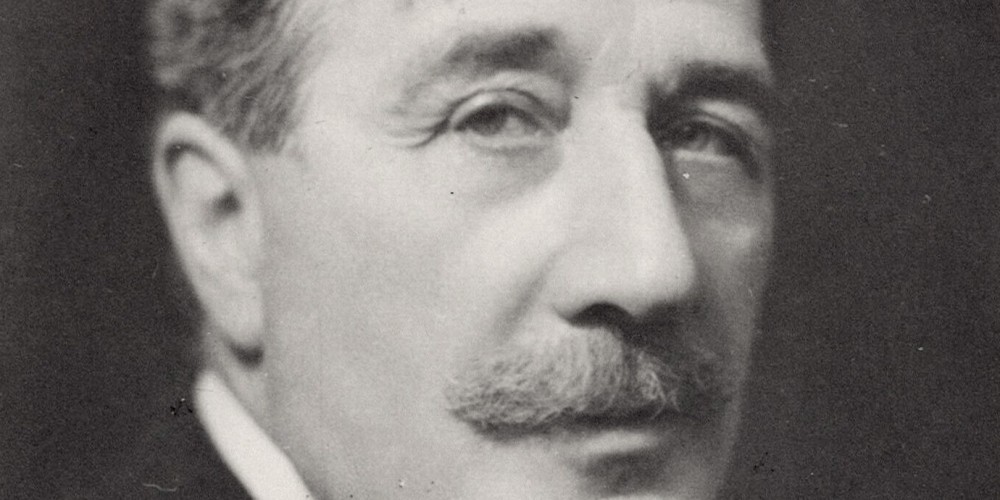
Émile-Auguste Chartier was born on March 3, 1868, in Mortagne-au-Perche, Orne, the son of a veterinarian. A scholarship student at the Alençon lycée, he was a brilliant pupil—he had considered preparing for the École Polytechnique. Ultimately, it was the preparatory class at the Lycée Michelet that attracted him. There, in 1886, he met Jules Lagneau, a discreet yet brilliant philosopher, who transformed "all my perceptions." Alain would later write: "At twenty, I saw the spirit in the cloud." Lagneau had instilled in him Spinoza and the imperative of uncompromising thought.
In 1889, he entered the École Normale Supérieure on Rue d'Ulm. In 1892, he ranked third out of eight in the agrégation examination in philosophy. This marked the beginning of his straightforward career path as a professor: Pontivy, Lorient, Rouen, and then Paris. But Alain had never wanted a career in the sense that the term implies upward mobility. He remained a professor. By choice. Because the classroom was the place where thought was tested in real time.
Read more: In 2024-2025, the ENS and its research are taking an impact-oriented turn – Planète Grandes Écoles
Alain and the 5,000 Statements: Philosophizing in the Daily Press
Beginning in 1903, Alain started publishing columns in La Dépêche de Rouen et de Normandie, which he titled "Sunday Musings," then "Monday Musings," and finally "Music of a Norman." From 1906 onward, the publication became daily. More than 3,083 of these "Musics" appeared in this single newspaper until 1914. The column resumed after the war in various magazines until 1936. In total, Alain published more than 5,000 of these "Musics."
The Propos is a brief form—rarely more than a page—of philosophical reflection based on an everyday event, an observation, or a reading. Alain had invented a philosophical journalism without equal: accessible without being simplistic, demanding without being impenetrable. The formula had to be short, striking, and memorable. "To think is to say no," he had written. "All passions arise from what we endure, instead of governing." These pronouncements circulated throughout educated France between the two world wars.


Read more: Jean-Paul Sartre, ENS Paris (Ulm), philosopher of existentialism – Alumnow
Alain enlisted at 46: Verdun, Mars, or the war judged
A committed pacifist since the Dreyfus Affair, Alain had campaigned against entering the war in his "Propos" (Proposals) until the summer of 1914. Then, on August 26, 1914, at the age of 46—exempted from military service as a student at the École Normale Supérieure—he voluntarily enlisted in the 3rd Artillery Regiment. He wanted to experience the war from the inside, not from afar. "To be able to speak about war, one had to first fight in it," he had said.
In May 1916, while transporting munitions to Verdun, he crushed his foot in a wagon wheel spoke. Demobilized in October 1917, he returned to Le Vésinet, disabled. In 1921, he published *Mars ou la guerre jugee* (Mars, or War Judged) – the most widely read pacifist pamphlet of the interwar period. In it, he described war as a machine for manufacturing obedience and extinguishing individual judgment. This was the thinking of a man who had seen Verdun from the inside and who continued to believe that peace was preferable – without ever claiming that war did not exist.
Alain at the Lycée Henri-IV: Simone Weil, Aron, Canguilhem
In 1909, Alain was appointed professor of khâgne at the Lycée Henri-IV – the most prestigious literary preparatory class in France. He taught there until 1933, when a stroke left him immobilized. Twenty-four years in the same class. Among his students were Simone Weil (who revered him), Raymond Aron, Georges Canguilhem, Julien Gracq, André Maurois, and Jean Prévost.
André Maurois had written: "What I cannot convey is the energy of those classes, which one entered with the tenacious hope of discovering, that morning, the secret of the world, and from which one left with the joy of having understood that perhaps there was no secret, but that nevertheless it was possible to be a man, and to be so with dignity, nobility." Alain had never wanted to be anything other than a professor. He had never applied to university, never sought academic honors. The École Normale Supérieure had shaped him. He had shaped the next generation since his time in preparatory classes in Paris.
Émile Chartier, known as Alain, died on June 2, 1951, in Le Vésinet, at the age of 83. He had refused the Nobel Prize in Literature that had been offered to him. He was buried in Père-Lachaise Cemetery. Three associations of his devoted followers perpetuated his work. "All of philosophy is there," Simone Weil had said of him. The phrase serves as his epitaph.
Frequently asked questions about Alain (Émile Chartier)
Which school did Alain (Émile Chartier) attend?
Alain, whose real name was Émile-Auguste Chartier, entered the École Normale Supérieure on rue d'Ulm in 1889, after preparatory classes at the Lycée Michelet. He came third in the agrégation examination in philosophy in 1892. He had considered preparing for the École Polytechnique before turning to philosophy after meeting Jules Lagneau.
What are Alain's Remarks?
The "Propos" are short philosophical pieces that Alain published in the press starting in 1903, first in La Dépêche de Rouen and then in various journals. More than 5,000 "Propos" appeared in total up to 1936. Each "Propos" begins with a daily observation or a current event to develop an accessible philosophical reflection. They invented a form of philosophical journalism without equal in the French press.
Why did Alain enlist in the Great War despite his pacifism?
Alain enlisted voluntarily on August 26, 1914, at the age of 46, despite being exempt from military service as a student at the École Normale Supérieure and having campaigned for peace. He explained that he wanted to judge the war from within rather than from a Parisian office. He had his foot crushed at Verdun in 1916 and was demobilized in 1917. This experience directly informed his pamphlet, Mars, or War Judged (1921).