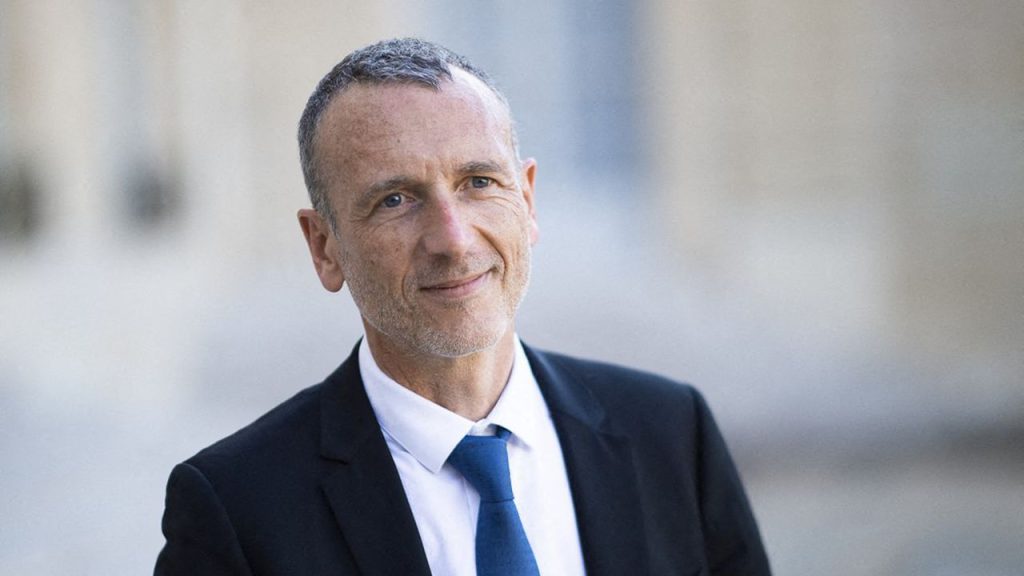
In 2016, at the HEC Paris graduation ceremony, he warned the young graduates: “When I was at HEC, I was given extremely powerful tools without being told what they were for.” The speech went viral. In 2020, he made Danone the first major French listed company to obtain the status of a Purpose-Driven Company. In March 2021, activist funds succeeded in having him immediately ousted. Emmanuel Faber was the most atypical CEO in the CAC 40.
Faber at HEC Paris: Gap, the mountains, and a brother who changed everything
Emmanuel Faber was born on January 22, 1964, in Grenoble. He completed his baccalaureate in Gap, in the Hautes-Alpes region. The mountains would remain a constant reference point throughout his life – mountaineering as a practice and as a metaphor for leadership. He attended HEC Paris and graduated in 1986 – class of H.86.
What truly shaped his worldview wasn't school, but his brother Dominique, who suffered from schizophrenia and died prematurely. He speaks of him in his book, Opening a Path: "There isn't a day that goes by that I don't think of him. He provided me with a living and constant testimony of a form of otherness." This constant presence of vulnerability in his family life fostered a relationship with money and power that his peers in the CAC 40 did not share.
It was while reflecting on his time at HEC that he expressed this unease: the school had given him the tools of power without teaching him the wisdom to use them. This 2016 speech, viewed thousands of times online, publicly expresses what many alumni of elite schools think privately.
Read more: HEC Paris launches a €300 million fundraising campaign – Planète Grandes Écoles
Faber before Danone: Bain, Barings, Legris Industries
After graduating from HEC in 1986, Faber joined Bain & Company as a strategy consultant for two years. He then moved to Barings Bank – the same bank that would collapse in 1995 due to trader Nick Leeson. In 1993, he joined Legris Industries as Chief Financial Officer, becoming CEO in 1996. This career path – consulting, banking, and leading an industrial group – gave him a rare versatility before joining Danone.
Read more: Jean-Paul Agon, HEC Paris, CEO of L'Oréal – Alumnow


Faber at Danone: Grameen Bank, a Purpose-Driven Company, and the Rejection of Golden Retirement Plans
In 1997, Emmanuel Faber joined Danone as Director of Finance, Strategy and Information Systems. His rise to power was gradual: member of the executive committee in 2000, Director of the Asia-Pacific region in 2005, Deputy Chief Executive Officer in 2008, Chief Executive Officer in 2014, CEO in 2017.
From the moment he arrived, he steered Danone towards a vision of the company that went beyond profit maximization. In 2006, with Franck Riboud, he co-founded Grameen Danone Foods in Bangladesh with Muhammad Yunus – the first large-scale social joint venture in the food industry. In 2008, he created the Danone Communities Fund. His consistent refusal of a salary increase and his rejection of his golden parachute – an estimated €20 million – made a lasting impression in an environment where such practices are commonplace.
In 2020, Danone became the first major French listed company to obtain the status of a Purpose-Driven Company – enshrining social and environmental objectives alongside financial goals in its bylaws. That same year, Danone also obtained B Corp certification. For Faber, this represents the culmination of a long-held conviction: that a company's sole purpose is not to create value for its shareholders.
Read more: François-Henri Pinault, HEC Paris, CEO of Kering – Alumnow
Faber's ouster by activist funds and what followed
Between December 1, 2017, and December 31, 2020, Danone's share price fell by nearly 23%, while the CAC 40 index rose by 4.5%. At the end of 2020, the Bluebell Capital fund publicly called for Danone's departure, lamenting that "the right balance between shareholder value creation and sustainability issues" had not been found. In February 2021, Artisan Partners (holding 3% of the capital) joined the pressure.
On March 14, 2021, the board of directors decided on his immediate departure. Emmanuel Faber left Danone without having been able to finish what he had started. The question remains open: was it the failure of a leader who sacrificed short-term performance to his convictions, or the failure of a shareholder system incapable of financing a necessary but lengthy transformation?
In December 2021, he was appointed chairman of the ISSB – the International Sustainability Standards Board, an organization created by IFRS to develop global accounting standards on climate and sustainability risks. For HEC Paris alumni, Emmanuel Faber remains the most divisive figure of his generation: the one who believed he could change the rules of capitalism from within a large listed company, and who paid the price for that attempt.
Frequently asked questions about Emmanuel Faber
Which school did Emmanuel Faber attend?
Emmanuel Faber graduated from HEC Paris (class of H.86, 1986). He then worked at Bain & Company, Barings, and Legris Industries before joining Danone in 1997.
Why did Emmanuel Faber leave Danone?
Emmanuel Faber was forced to leave Danone on March 14, 2021 under pressure from activist funds, including Bluebell Capital and Artisan Partners, who criticized the group's underperformance on the stock market (-23% between the end of 2017 and the end of 2020) and believed that the emphasis on sustainability was at the expense of creating value for shareholders.
What is the ISSB, chaired by Emmanuel Faber?
The International Sustainability Standards Board (ISSB) is an international organization created in late 2021 by the IFRS Foundation to develop global sustainability disclosure standards for investors. Emmanuel Faber has been its chairman since December 2021. The ISSB aims to harmonize ESG reporting globally to make the climate and social risks of companies comparable.