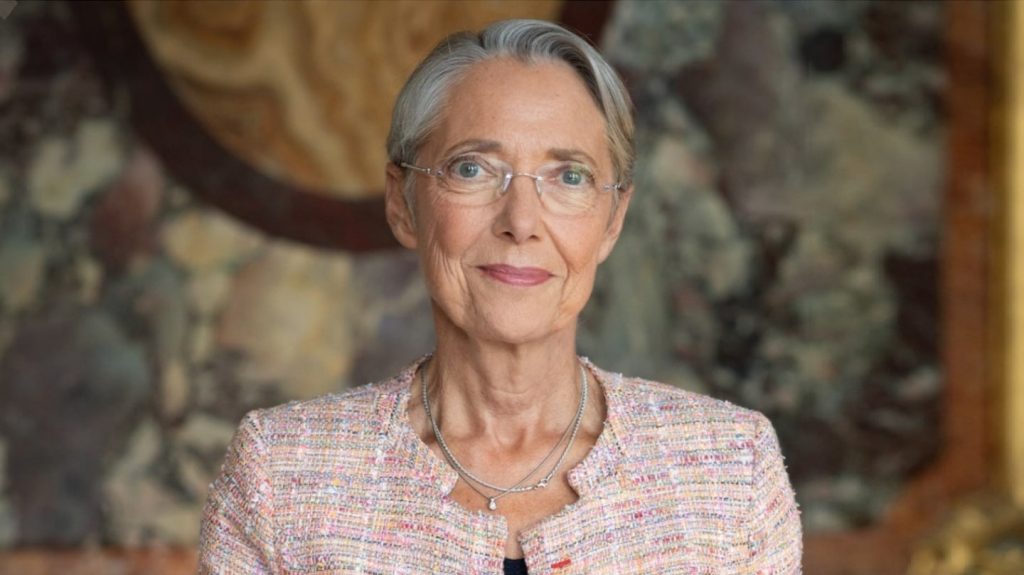
Her father was a member of the French Resistance. He committed suicide when she was 11. She graduated from the École Polytechnique (class of 1981) and then from the École des Ponts et Chaussées (School of Bridges and Roads). Forty years in the civil service—from the Ministry of Public Works to the RATP (Parisian public transport authority), from the RATP to the Prime Minister's office. In May 2022, she became the second female Prime Minister of the Fifth Republic. She used Article 49.3 of the French Constitution twenty-three times, including to pass the pension reform. She was nicknamed "Madame 49.3." In December 2024, she returned to the Ministry of National Education.
Milestone at Polytechnique and Ponts et Chaussées: Janson-de-Sailly and the Resistance Father
Élisabeth Borne was born on April 18, 1961, in Paris (15th arrondissement). Her father was a member of the French Resistance—a commitment that profoundly shaped her identity. She was 11 years old when he committed suicide. This early tragedy, which she has addressed in her speeches, deeply influenced her approach to public service and responsibility.
She attended the Lycée Janson-de-Sailly, where she also completed preparatory classes for the Grandes Écoles. She passed the entrance exam for Polytechnique and joined the class of 1981. She obtained her engineering degree, then continued her studies at the École Nationale des Ponts et Chaussées, graduating in 1986 with the title of Engineer of Bridges and Roads. She furthered her education with an MBA from the Collège des Ingénieurs.
Read more: X-ENS 2026 entrance exam: discover all the topics – Planète Grandes Écoles
High-level civil servant: from the Ministry of Public Works to the RATP (Parisian public transport operator), via Jospin and the SNCF (French National Railway Company).
In 1987, she began her career at the Ministry of Public Works. She then joined the regional directorate of public works for the Île-de-France region. In the early 1990s, she became an advisor at the Ministry of National Education, first to Lionel Jospin and then to Jack Lang. In 1997, she joined the cabinet of Prime Minister Lionel Jospin as a technical advisor responsible for Urban Planning, Housing, Transportation, and Urban Development.


After the end of the Jospin government in 2002, she joined the semi-commercial public sector: first as Director of Strategy at SNCF, then as Director of Concessions at Eiffage. In 2008, she was appointed Director General of Urban Planning at the Paris City Hall under Bertrand Delanoë. In 2013, she became the first female Prefect of the Poitou-Charentes region. In 2014, she served as Chief of Staff to Ségolène Royal at the Ministry of Ecology. In 2015, she became Chairwoman of the RATP—the Paris public transport authority.
Read more: Valéry Giscard d'Estaing, Polytechnique and ENA, President of the Republic – Alumnow
Ministerial agenda: Transport, Ecology, Labor — and pension reform
In May 2017, Emmanuel Macron appointed her Minister for Transport under Nicolas Hulot in the first Philippe government. She spearheaded the reform of the SNCF (French National Railways) – opening it up to competition, transforming its employment status, and ending recruitment under the existing civil service status. In July 2019, she took on the portfolio of Minister for the Ecological and Inclusive Transition. In July 2020, she was appointed Minister of Labour, Employment and Integration.
On May 16, 2022, Emmanuel Macron appointed her Prime Minister—the second woman to hold this position under the Fifth Republic, after Édith Cresson in 1991. Her term was marked by constant tension between a relative majority in the National Assembly and a determined opposition. She invoked Article 49.3 of the Constitution—allowing the government to pass legislation without a vote—23 times, a record under the Fifth Republic, earning her the nickname "Madame 49.3." The most publicized of these uses was for the pension reform (raising the legal retirement age from 62 to 64) in March 2023, which triggered several weeks of protests.
In January 2024, Emmanuel Macron replaced her with Gabriel Attal. In December 2024, she returned to the government as Minister of State for National Education and Higher Education. For alumni of Polytechnique and École des Ponts et Chaussées, Élisabeth Borne represents the trajectory of an engineer who chose the civil service over the private sector, and who climbed every rung of the state ladder—from the Ministry of Public Works to Matignon—in forty years of a straightforward career.
Frequently asked questions about Elisabeth Borne
Which school did Elisabeth Borne attend?
Élisabeth Borne graduated from École Polytechnique (class of 1981) and École nationale des Ponts et Chaussées (1986), where she earned the title of engineer of the Ponts et Chaussées. She also obtained an MBA from the Collège des ingénieurs.
Why is Elisabeth Borne nicknamed Madame 49.3?
Elisabeth Borne used Article 49.3 of the Constitution — allowing a bill to be passed without a vote in the National Assembly — 23 times during her term as Prime Minister (2022-2024), including once to pass the pension reform in March 2023. This record under the Fifth Republic earned her the nickname "Madame 49.3".
What did Elisabeth Borne do after Matignon?
Élisabeth Borne left Matignon in January 2024, replaced by Gabriel Attal. She was elected Member of Parliament for Calvados in June 2022 and retained her seat. In December 2024, she returned to the government as Minister of State for National Education and Higher Education in the Bayrou government.