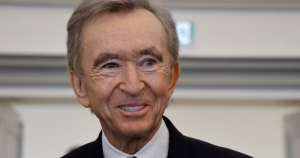
He was ranked among the four most respected executives in the world by the Financial Times and PricewaterhouseCoopers in 2003, 2004, and 2005. He turned Nissan around in three years when everyone thought it impossible. He speaks five languages. And in December 2019, he left Japan hidden inside a case of audio equipment transported by a group of men posing as musicians. Carlos Ghosn's career is a reflection of the man himself: in a class of his own.
Ghosn at Polytechnique and Mines ParisTech: three cultures before his first job
Carlos Ghosn was born on March 9, 1954, in Porto Velho, Brazil, into a Lebanese Maronite family. His grandfather had emigrated from Lebanon to Brazil at the age of 13. At 6, Carlos moved with his mother to Beirut, where he attended a Jesuit school – Notre-Dame de Jamhour. He would later say that this school instilled in him a taste for challenge and competitiveness. At 18, he arrived in France.
He attended preparatory classes in science at the Lycée Stanislas in Paris from 1972 to 1974, then entered École Polytechnique – class of 1974. He graduated in 1978 and went directly to the École des Mines de Paris, from which he graduated the same year. This dual Polytechnique-Mines curriculum is the passport for engineers aiming for the highest industrial positions – the elite civil service, the top management of CAC 40 companies. He already speaks French, Portuguese, Arabic, and English. He will learn Japanese later.
What Polytechnique and Mines ParisTech provided him was analytical rigor and a systemic understanding of complex industrial processes. When he restructured Nissan ten years later, he broke down the problem like an engineer: identifying costs, mapping flows, setting quantifiable objectives, and meeting deadlines. No rhetoric, no grand speeches. Dashboards and results.
Read more: X-ENS 2026 entrance exam: discover all the topics – Planète Grandes Écoles
Michelin and Renault: learning the "Cost Killer"
In 1978, Ghosn joined Michelin as a production engineer at the Puy-en-Velay plant. Within six years, he climbed the ranks: plant manager, head of R&D for agricultural tires, and then director of Michelin's South American operations in São Paulo. His ability to reduce costs without sacrificing quality earned him recognition. In 1989, he became president of Michelin North America. He was 35 years old.
In 1996, Louis Schweitzer recruited him to Renault as deputy managing director. His mission: to turn around a group emerging from a difficult period. Ghosn closed the Vilvoorde plant in Belgium in 1997 – a brutal, politically costly, but economically necessary decision. The nickname "Cost Killer" stuck to him. He didn't deny it.
Read more: Bernard Arnault, Polytechnique, CEO of LVMH – Alumnow


Ghosn and Polytechnique facing the Nissan challenge: the 18-month revival plan
In 1999, Renault acquired a 36.8% stake in Nissan, a Japanese automaker on the verge of bankruptcy with $20 billion in debt. Ghosn was sent to Tokyo as deputy CEO, then CEO. He didn't speak Japanese. He didn't know the Japanese automotive industry. He arrived in a corporate culture radically different from anything he had ever experienced.
In 18 months, he presented and implemented the Nissan Revival Plan: closing 5 plants, reducing 21,000 jobs, and streamlining the supplier network from 1,145 to 600 partners. In 2001, Nissan was profitable for the first time in eight years. By 2003, the debt was fully repaid and net profit had increased by 33%. Fortune Asia named him "Man of the Year 2003".
This turnaround – hailed as a "miracle" by the Japanese business press – is directly linked to the engineering methodology he learned at Polytechnique and Mines. Analyzing a system, identifying key drivers, setting non-negotiable objectives, and adhering to the schedule. The culture of rigorous quantitative analysis, applied to a struggling automotive group.
Read more: Patrick Pouyanné, Polytechnique, CEO of TotalEnergies – Alumnow
The Renault-Nissan-Mitsubishi alliance: a unique industrial model
In 2005, Ghosn became CEO of both Renault and Nissan simultaneously – a first in global industrial history. He travels an average of 150,000 miles by plane each year. In 2016, he added Mitsubishi to the alliance following a fuel consumption data falsification scandal involving the Japanese automaker. The Renault-Nissan-Mitsubishi Alliance became the world's largest automotive group by volume in 2017, surpassing Toyota and Volkswagen. His total compensation from the three groups exceeded $17 million that year.
The arrest, the escape, and Lebanon: an unparalleled end to the journey
On November 19, 2018, Carlos Ghosn was arrested at Tokyo airport. The Japanese charges involved financial misconduct—concealing income and using company assets for personal gain. He denied the allegations. The legal proceedings dragged on. In December 2019, while out on bail, he secretly left Japan. According to Turkish and Japanese investigators, he was hidden in a case of audio equipment transported by a group of men posing as musicians, loaded onto a private jet bound for Turkey, and then on to Lebanon.
Since 2020, he has lived in Beirut, a country without an extradition treaty with Japan. He teaches management at the Holy Spirit University of Kaslik, gives lectures, and publishes books. Legal proceedings have been initiated against him in thirteen countries. He denies all the accusations and claims to have been the victim of a conspiracy orchestrated by Nissan executives who wanted to prevent a further merger with Renault.
For alumni of Polytechnique and Mines ParisTech, Ghosn's career illustrates something rare and troubling at the same time: an engineer trained in the best French schools who built one of the world's largest industrial groups – and whose end of career remains one of the most commented-on legal sagas in the history of contemporary capitalism.
Frequently asked questions about Carlos Ghosn
Which school did Carlos Ghosn attend?
Carlos Ghosn graduated from École Polytechnique (class of 1974) and École des Mines de Paris (1978). He then joined Michelin in 1978 before joining Renault in 1996.
How did Carlos Ghosn turn Nissan around?
Appointed CEO of Nissan in 1999, Carlos Ghosn presented the Nissan Revival Plan: closure of 5 plants, reduction of 21,000 jobs, and streamlining of the supplier network. In 2001, Nissan was profitable for the first time in 8 years. By 2003, the $20 billion debt had been fully repaid.
Why did Carlos Ghosn flee Japan?
Arrested in November 2018 by Japanese authorities on charges of financial misconduct, Carlos Ghosn secretly left Japan in December 2019 while out on bail. According to investigators, he was hidden in a case of audio equipment transported in a private jet to Turkey and then Lebanon. He denies the charges and has since been living in Beirut, a country without an extradition treaty with Japan.